February 4, 2026
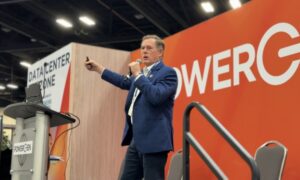
Based on the presentation “Powering AI: The Rise of Hybrid Substations for Data Centers,” by Jake Ring, PDM CEO, at PowerGen 2026.
AI is driving an unprecedented surge in power demand. One AI data center consumes 100–500 megawatts per site, which rivals the daily electricity needs of a mid‑sized city, like Waco, TX. Traditional utility expansion can’t keep pace, creating multi‑year delays that stall capacity and growth. As a result, developers and hyper–scalers are rethinking how power is delivered … and the hybrid substation is rapidly gaining traction.
What is a Hybrid Substation?
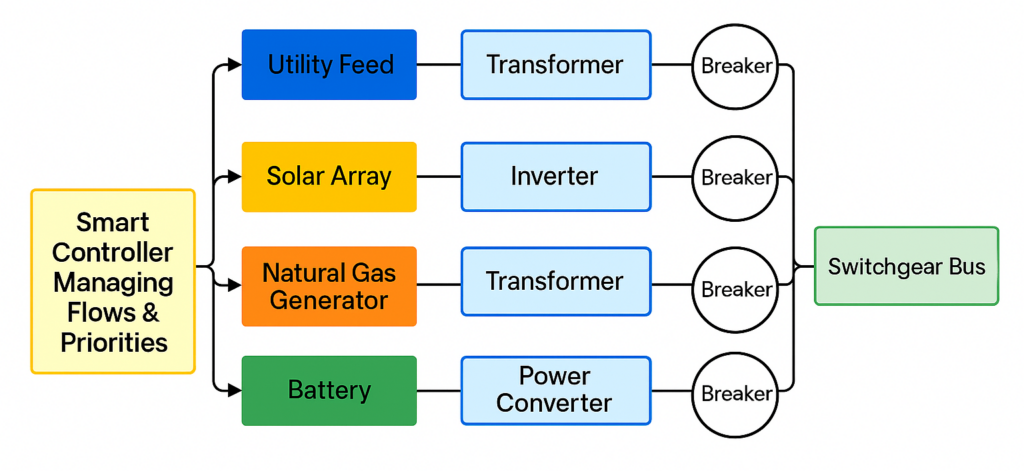
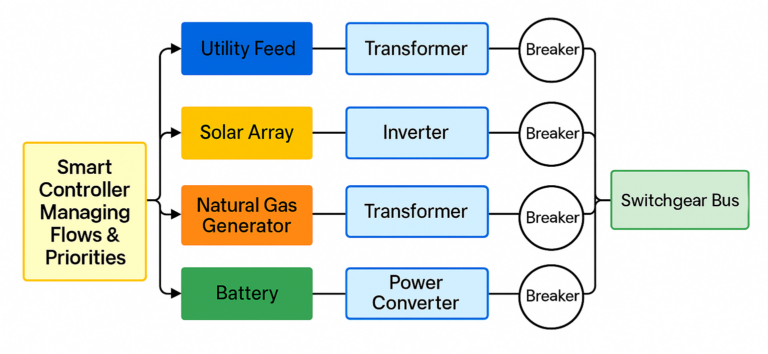
A hybrid substation – previously referred to as a microgrid – is an integrated electrical system that combines multiple power sources and storage to deliver resilient, localized power independent of or in parallel with the main grid. Rather than relying entirely on the utility grid, hybrid substations bring power generation and storage closer to the load.
A typical hybrid substation includes:
- Utility Grid Connections: For primary or backup power
- On‑Site Generation: Natural gas turbines, fuel cells, solar, or wind (less likely)
- Energy Storage: Battery or other long-duration solutions
- Control Systems: EMS or microcontroller to orchestrate flows
This architecture allows operators to add capacity faster, improve resilience, and adapt to changing grid conditions without waiting years for utility upgrades.
Why Hybrid Works:
Hybrid substations solve several challenges inherent in traditional power delivery.
- Speed to Power: Timelines of 18–24 months, versus 5+ years for traditional utility builds.
- Capacity on Demand: On‑site generation fills supply gaps as utility interconnects and upgrades catch up.
- Resilience & Flexibility: With energy storage and on-site generation in place, facilities can continue operating through grid disturbances and choose how they run (utility‑only, on‑site, or in a hybrid mode) based on operating conditions.
- Sustainability: systems allow operators to mix renewable resources with efficient thermal generation, balancing emissions goals with reliability.
Real Projects, Real Results
Hybrid substations are not theoretical. Several configurations are already being deployed across North America.
In the Pacific Northwest, Aligned Data Centers deployed a utility‑plus‑battery hybrid featuring 31 MW / 62 MWh battery energy storage system (BESS). By integrating storage directly into the substation design, Aligned accelerated timelines while reducing peak demand on the local grid.
In Sparks, NV, Crusoe Energy took a different approach, deploying a fully off‑grid hybrid system by combining solar generation with second‑life batteries (old Telsa packs). The project delivers 12 MW / 63 MWh at reduced cost while running AI compute in a fully islanded microgrid.
On a larger scale, Project Fermi in Amarillo, TX, combines utility power with gas, nuclear, wind, and solar‑battery resources. This project is targeting 1 GW by 2026 and up to 11 GW long term in coordination with ERCOT.
What’s Next & Why it Matters
The message is simple: the power bottleneck isn’t going away.
Hybrid substations offer a proven path to faster deployment and will become the default design for data centers exceeding 200 MW by 2027–2028. It’s vital to start conversations with your grid operator, EPC partners, and transformer suppliers about hybrid designs for your next facility NOW.
And in the end, PDM can help you WIN. Contact us to learn more about our industry-crushing lead times to keep your power distribution projects on track.
Custom Dry Type PDU’s
Rapid Power Delivery for Hyper-Scale Data Centers
Replacing Non-Compliant Transformers
Powering AI: The Rise of Hybrid Substations for Data Centers

Power Reality Check